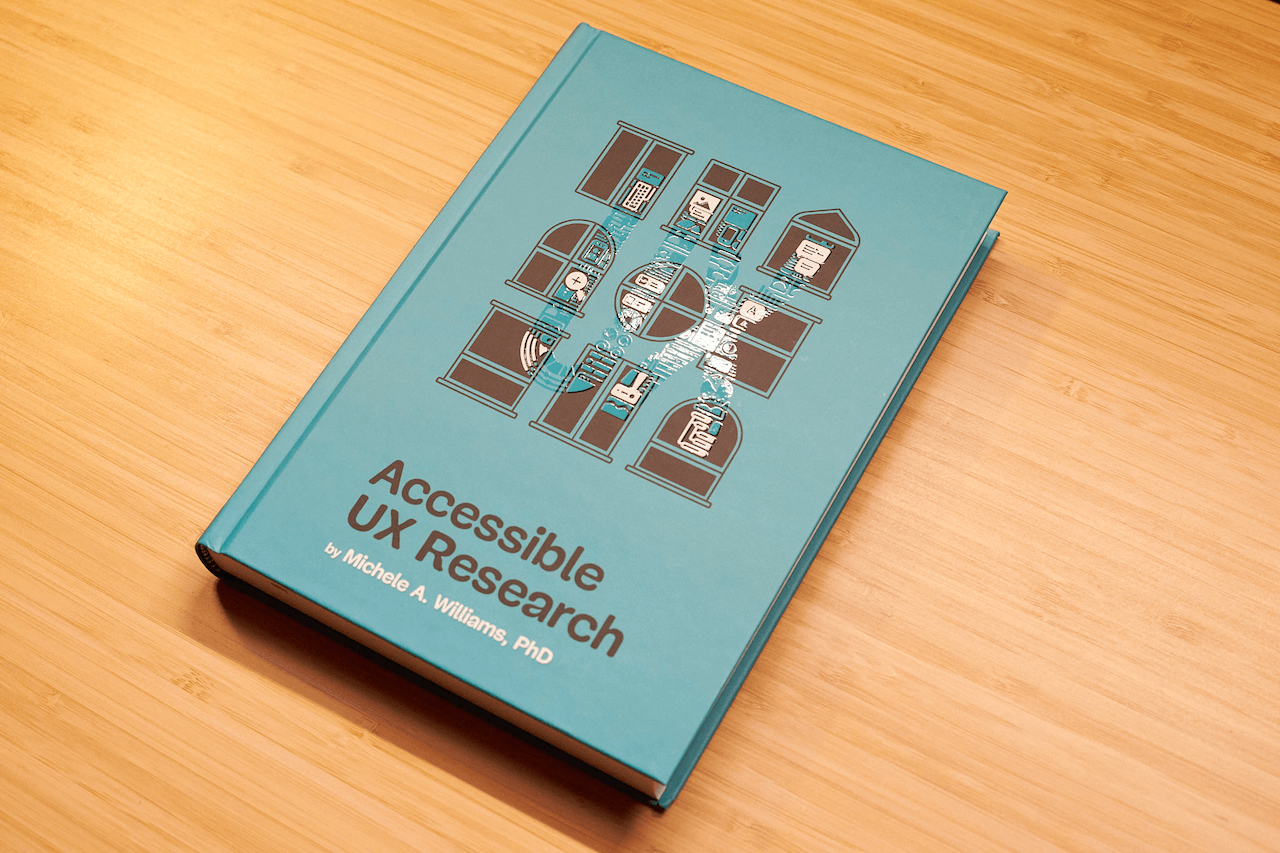
Now Shipping: Accessible UX Research by Michele Williams – A Practical Guide to Inclusive Design Methods
The gap between accessible products and inaccessible ones often comes down to a single factor: whether disabled users were included in the research process. Yet many UX researchers hesitate to include participants with disabilities, uncertain about logistics, worried about making mistakes, or simply unaware of how to start. Dr. Michele Williams' new book, "Accessible UX Research," addresses this knowledge gap head-on with a 324-page practical guide that transforms inclusive research from an intimidating prospect into a manageable, systematic process.
Why Most UX Research Fails Disabled Users
The problem isn't malicious intent. Most research teams want to build inclusive products. The barrier is practical: they don't know how to recruit disabled participants, set up accessible testing environments, or facilitate sessions that accommodate different access needs. This knowledge gap has real consequences. Products ship with barriers that could have been identified early if disabled users had been part of formative research. Teams scramble to retrofit accessibility after launch, a costly and often incomplete solution.
Williams' book tackles this from a systems perspective. Inclusive research isn't about adding a checklist item or running one accessibility-focused study. It requires rethinking how we approach every research phase, from initial planning through final reporting. The book provides frameworks for integrating disabled participants throughout the product lifecycle—formative research, prototype testing, and summative evaluation.
What Makes This Different From Accessibility Guidelines
If you're expecting another WCAG compliance manual, you'll be surprised. This book operates at a different level entirely. While technical standards tell you what to build, Williams focuses on how to learn what users actually need. The distinction matters because compliance doesn't guarantee usability. A screen reader-compatible interface can still frustrate blind users if the information architecture makes no sense or critical features are buried.
The book challenges the medical model of disability that treats accessibility as fixing broken users. Instead, it adopts a social model perspective: disability emerges from the interaction between a person and their environment. This mindset shift changes how you frame research questions, interpret findings, and communicate recommendations to stakeholders.
The Practical Implications
This philosophical grounding translates into concrete research practices. Williams provides detailed guidance on recruiting strategies, explaining where to find disabled participants beyond the usual recruitment agencies. She covers compensation considerations, communication protocols, and how to build trust with disability communities who have legitimate reasons to be skeptical of researchers.
The facilitation chapter addresses real scenarios researchers face: what to do when a participant's assistive technology conflicts with your testing setup, how to structure sessions for participants with cognitive disabilities, ways to capture observations without making participants feel like specimens under examination. These aren't hypothetical scenarios—they're drawn from Williams' 20+ years of experience influencing accessibility practices at major tech companies.
Who Benefits Most From This Resource
The book serves three distinct audiences, each with different entry points. Researchers new to accessibility work will find a comprehensive primer on disability categories, assistive technologies, and how to ask questions without introducing bias. The appendix alone—with its testing environment checklists and participant interaction guidelines—provides reference material you'll return to repeatedly.
For accessibility specialists, the value lies in the research methodology chapters. Many accessibility professionals come from development or design backgrounds and lack formal research training. Williams bridges that gap, explaining how to design studies that produce actionable insights rather than just identifying problems. The chapter on analyzing and reporting findings is particularly strong, addressing how to communicate accessibility issues in ways that motivate organizational action rather than defensive reactions.
Perhaps most importantly, the book serves managers, developers, and other team members who need to understand why inclusive research matters. The opening chapters on disability mindset and diversity of disability provide essential context without requiring readers to become accessibility experts. This makes the book valuable for building shared understanding across multidisciplinary teams.
The Research-Practice Gap
Academic accessibility research and industry practice often exist in separate worlds. Williams bridges this divide by combining scholarly rigor with practical constraints. She acknowledges that most teams don't have unlimited budgets or timelines, providing strategies for making research more inclusive within real-world limitations. The book includes an extensive interview with Dr. Cynthia Bennett, a blind UX researcher, offering perspectives on disability within the research field itself—a meta-level consideration that most accessibility resources ignore.
The foreword by Jared Smith of WebAIM and testimonials from practitioners like Eric Bailey and Manuel Matuzović signal the book's credibility within the accessibility community. These aren't generic endorsements; they speak to specific gaps the book fills in existing resources.
Beyond Compliance Thinking
One of the book's strongest contributions is pushing readers past compliance-oriented thinking. Meeting WCAG standards is necessary but insufficient. True accessibility requires understanding how disabled users actually interact with products, what workarounds they've developed, where friction occurs in real workflows. You can't extract this knowledge from guidelines—you need research.
Williams provides frameworks for integrating accessibility considerations into every research activity, not just dedicated accessibility studies. This approach normalizes disability as part of user diversity rather than treating it as a special case requiring separate processes. The result is research that produces richer insights for all users, since accessibility improvements often benefit everyone.
Implementation Considerations
The book's 324 pages are organized into eight chapters plus appendices, moving from conceptual foundations through practical execution. This structure supports both cover-to-cover reading and targeted reference use. The chapter on recruiting disabled participants, for instance, stands alone as a resource for teams ready to start inclusive research immediately.
The book is available in multiple formats: hardcover with stitched binding and ribbon marker, plus digital versions in PDF, ePUB, and Kindle formats. Smashing Magazine has resumed worldwide shipping after resolving customs issues, making the physical book accessible to international readers. The publisher offers free sample chapters for those wanting to evaluate the content before purchasing.
What This Means for Product Development
The broader implication extends beyond individual research projects. When teams consistently include disabled participants in research, it changes organizational culture. Accessibility stops being a compliance exercise handled by specialists and becomes integrated into how everyone thinks about users. Developers start considering screen reader users when architecting features. Designers prototype with keyboard navigation in mind. Product managers factor accessibility into roadmap decisions.
This cultural shift requires more than good intentions—it needs practical knowledge and confidence. Williams' book provides both, offering teams a roadmap for building research practices that reflect the full diversity of their user base. For organizations serious about accessibility, that foundation is worth considerably more than the book's $44 price tag.
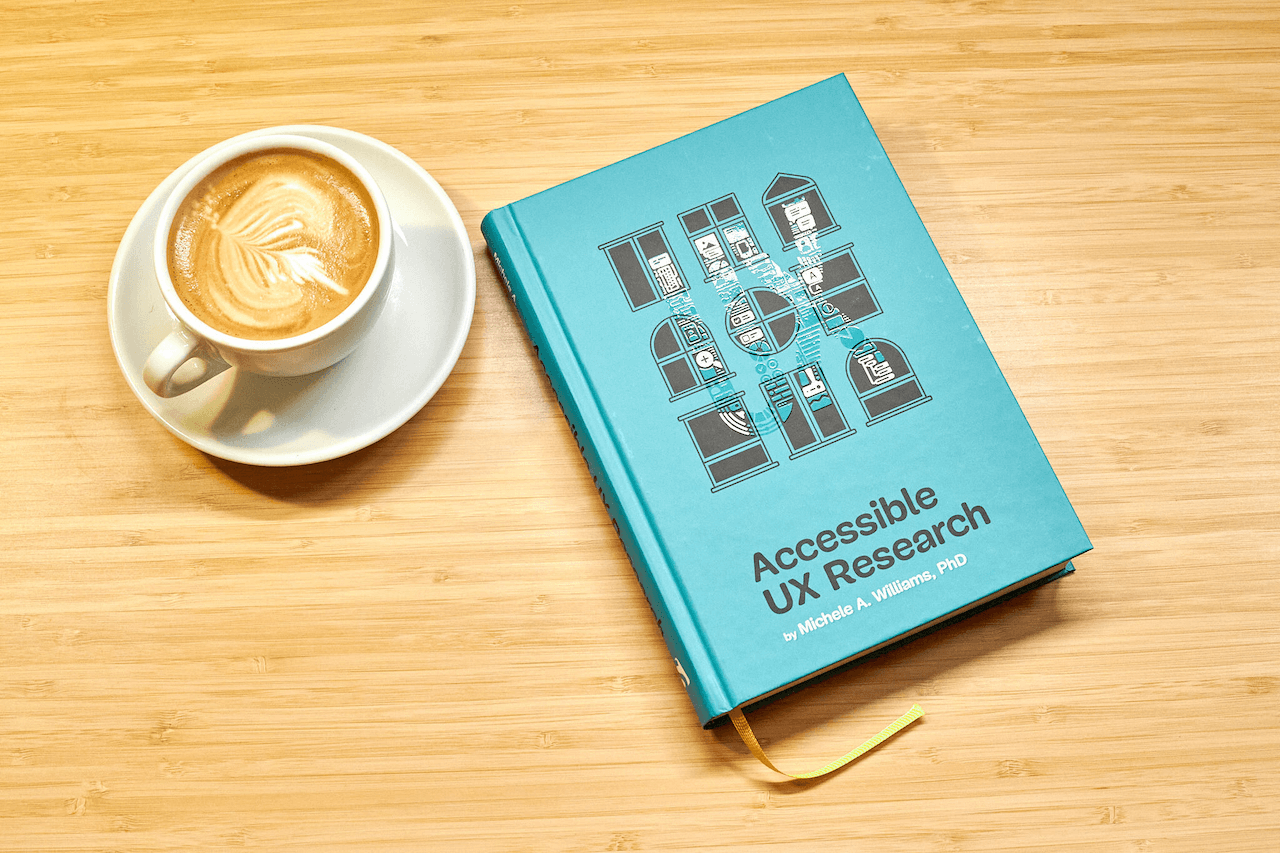
 With a foreword by Jared Smith of WebAIM and an extensive interview with a disabled researcher, "Accessible UX Research" brings together insights from throughout the Accessibility community. Photo by Marc Thiele. (Large preview)
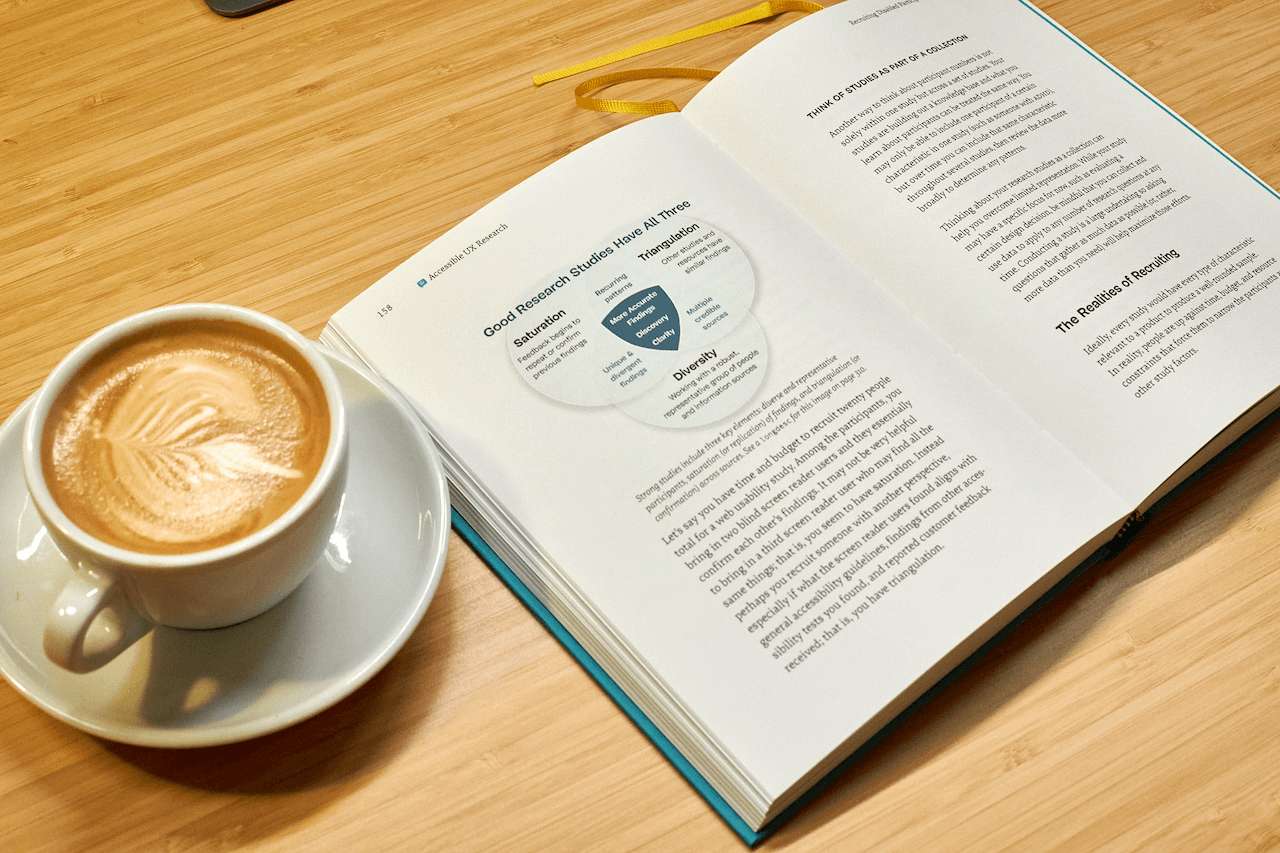 The book includes tips and strategies to help anyone doing research at any point in the product design cycle. Photo by Marc Thiele. (Large preview)
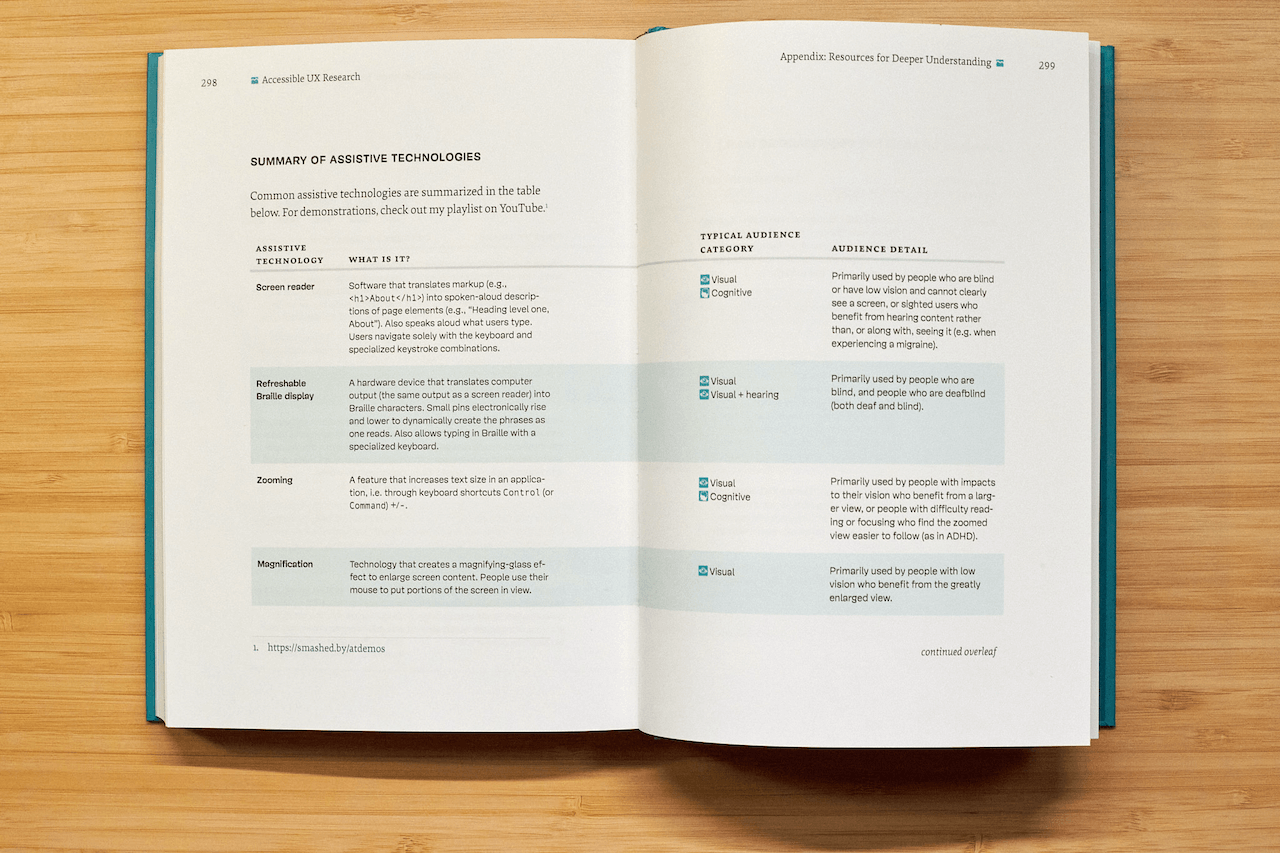 You'll find plenty of useful references in the appendix at the end of the book. You'll refer to these pages again and again. Photo by Marc Thiele. (Large preview)
You Might Also Like

I've Tested Portable Power Stations for Years — Here's What I'd Actually Buy in the Last Hours of the Amazon Big Spring Sale
What's !important #8: Light/Dark Favicons, @mixin, object-view-box, and More
